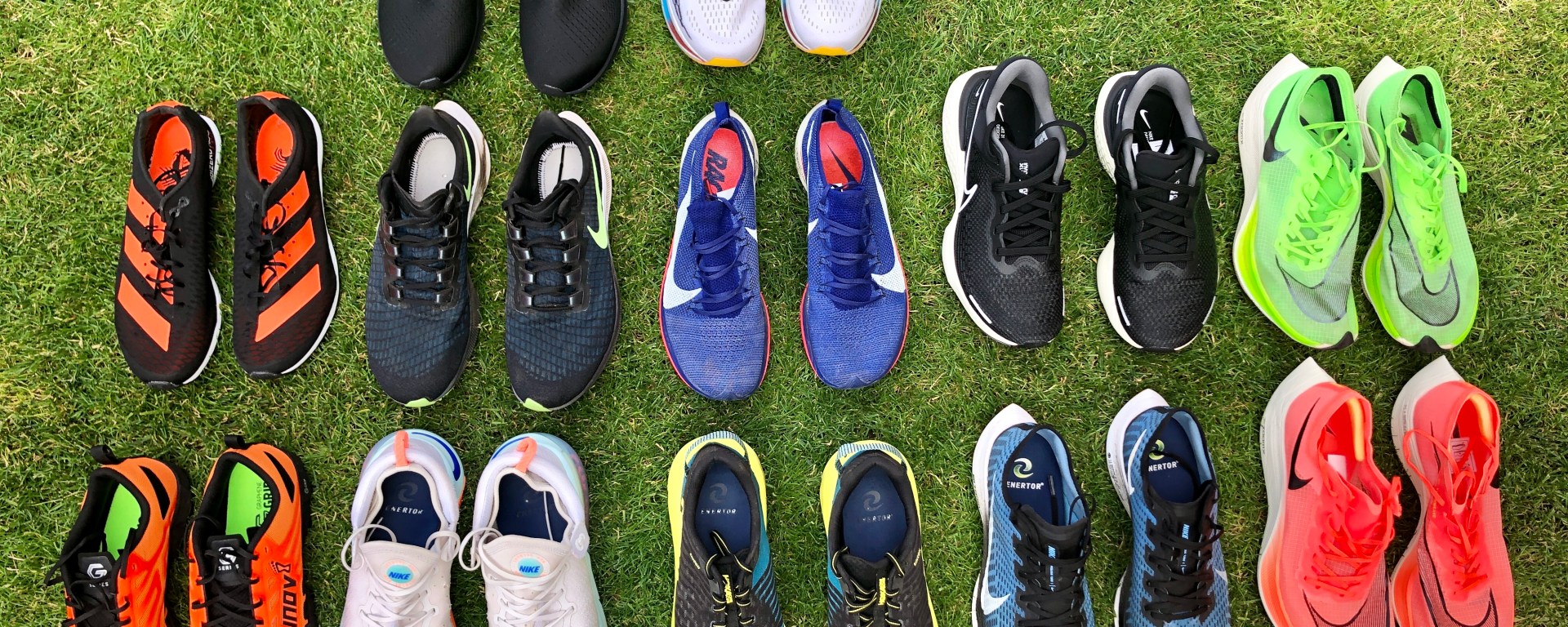
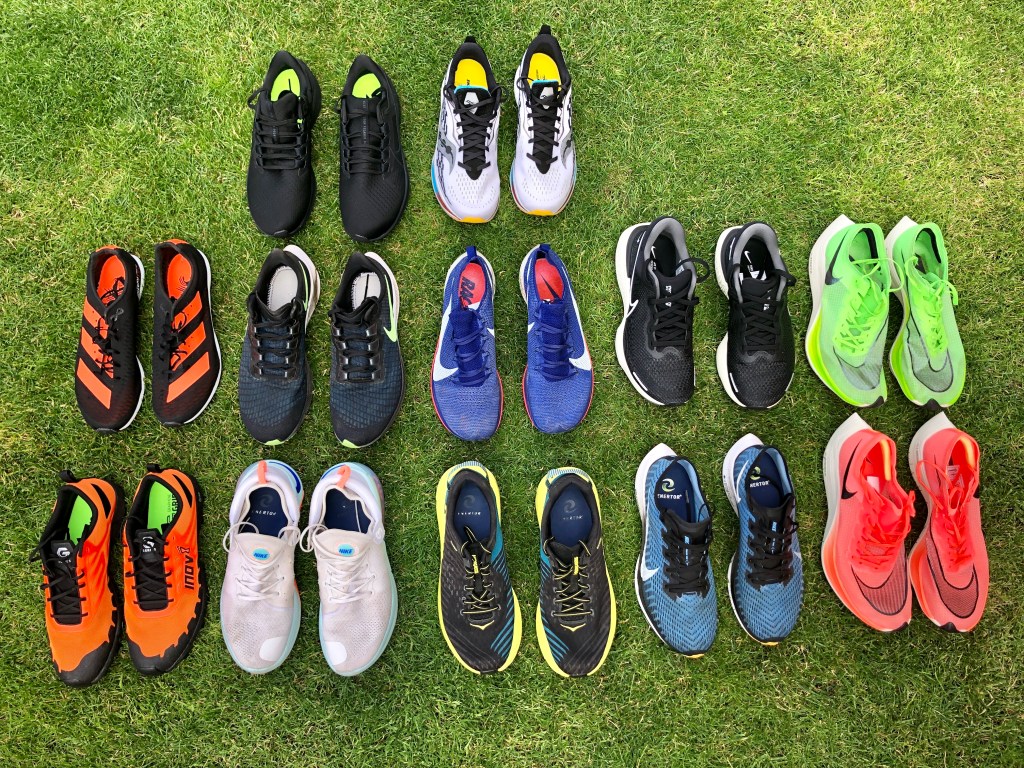
It has almost been 12 months since I posted MY 2020 RUNNING SHOE ROTATION so I think it is about time I shared the shoes I am/have been running in during 2021.
Just like in 2020 I have broken these down into Easy Day shoes, Tempo & Interval shoes, Long Run shoes, Race Day shoes and Cross Country / Trail shoes.
Whilst there looks to still be a lot of shoes here, some of them were purchases in 2018, 2019 and 2020, I just have not managed to wear them out yet. Mainly due to being out injured for 17 weeks between Oct – Feb, which totally sucked but did mean the shoes lasted longer. You have to look for positives in these situations.
I have added three new shoes into the rotation for 2021. The Nike Pegasus 38, Saucony Endorphin Speed 2 and Nike Invincible Run. I am yet to actually run in these but they are down for the autumn and winter training and no doubt well into 2022.
I have almost been a big fan of the Nike running shoes, I love the old warhorse, the Pegasus. They are a perfect shoe if you want to just buy one shoe to get through the daily miles and as the Peg 37 are showing me, they just keep going and going.
Race shoes are the same as last year because well let’s face it, racing just didn’t happen in 2020 and I’m not going to go out and splash the cash on some expensive 2021 carbon plate shoes when I have three pairs of VaporFly still good to go.
Easy Day Shoes:
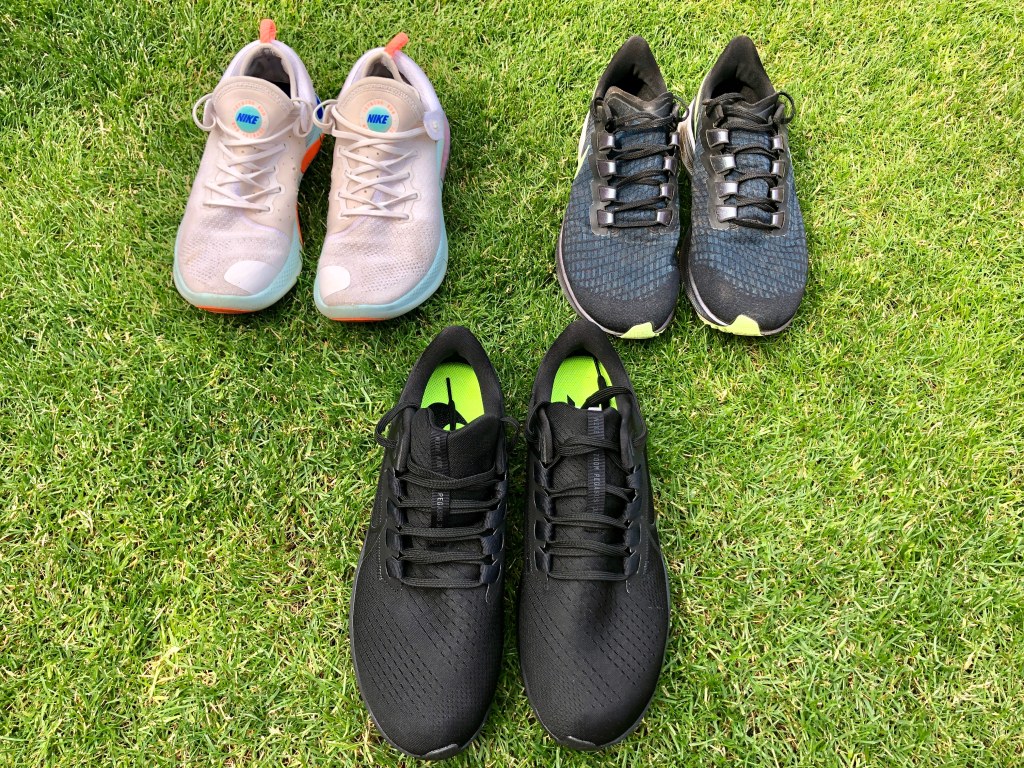
For my easy runs where I am just mostly running to feel at around 9:00/mi pace, I like to have a shoe with good support, hard-wearing but with a little cushioning as well. I am not after a shoe with bounce or energy return, I save those for the faster runs. Just a simple shoe that gives my feet and legs a little love on those easy recovery days, the feet have usually taken a beating on the longer and faster days so they deserve some TLC.
Nike Joyride Run Flyknit – 452 Miles (Retired)
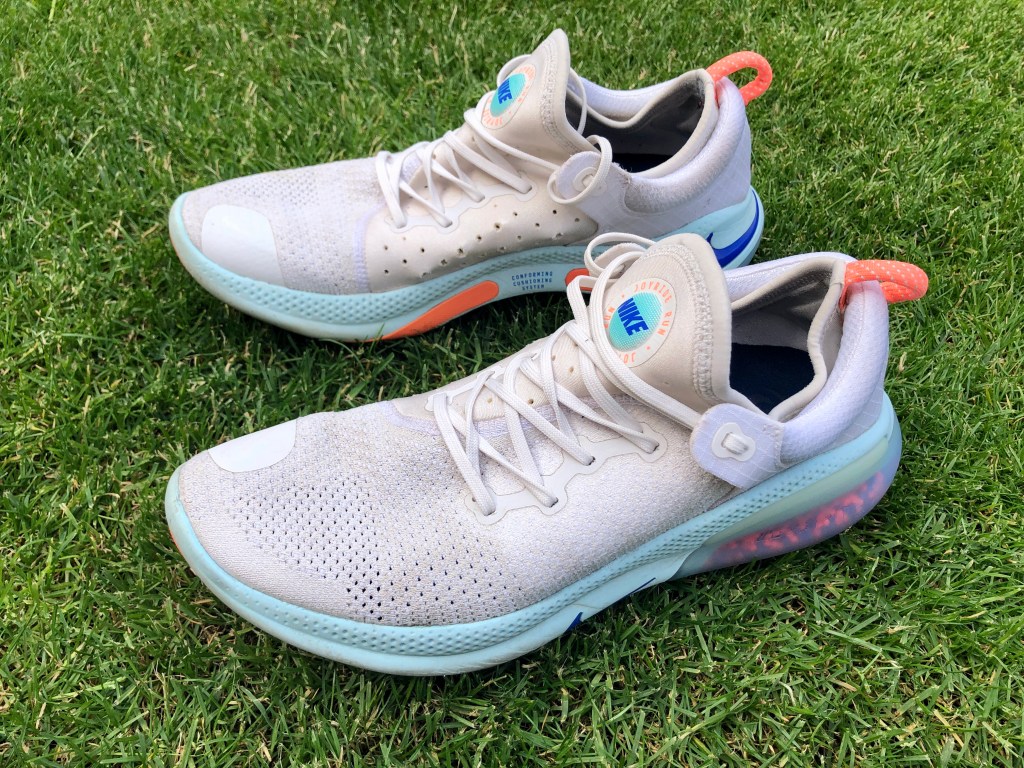

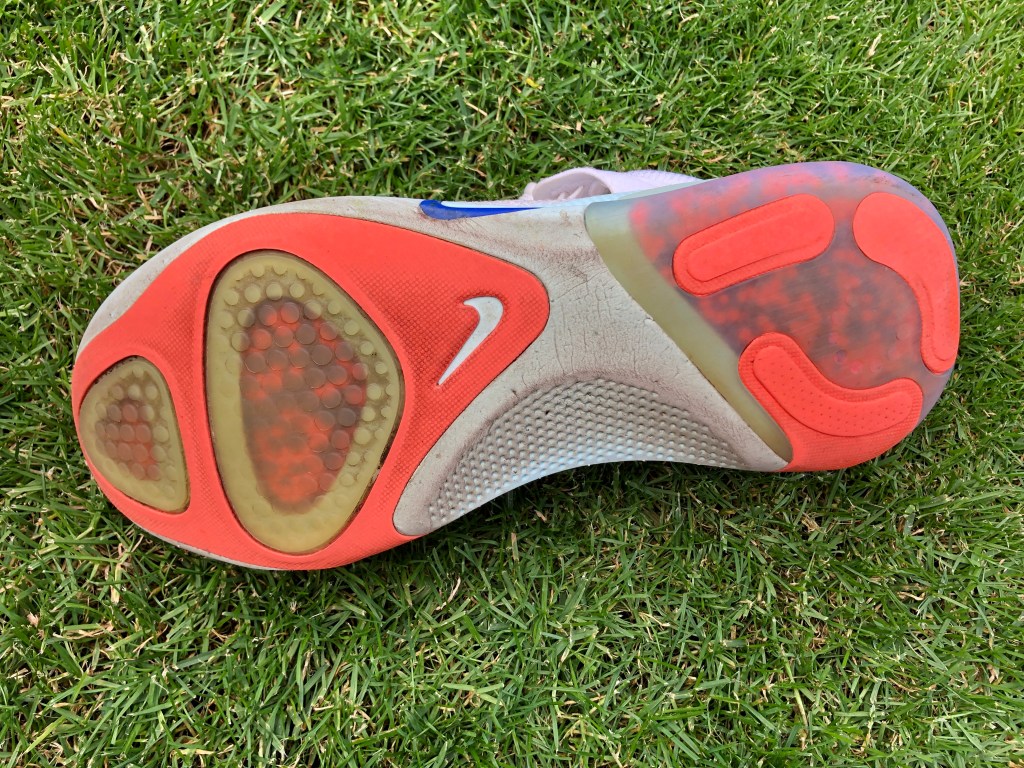
I brought these shoes 2 years ago and they clocked up just over 450 miles with little signs of wear. Some of the dimples on the rubber outsole have worn away. The midsole foam is in fairly good condition given the mileage and the flyknit upper looks as good as new besides a little discolouring but let’s face it, it’s a white shoe that has seen 450 miles so a little discolouring is to be expected.
This was a fairly heavy shoe and does not offer any energy return. It is filled with thousands of TPE foam beads that mould around your foot as you run, it feels a little strange at first but something you to get used to. Nike says this gives more support, a more stable and consistent foot strike and provides 14% extra impact absorption. I did notice that the foot strike felt softer and smooth so I guess that is a good thing for an easy day shoe, 14% extra impact absorption? I don’t know, Nike must have some way of measuring that but all I can say is the legs and feet like this shoe on those recovery days.
I guess the fact that Nike is no longer selling these shoes tells you all you need to know about the extra shock absorption and how the trail of these TPE beads went down.
Given the popularity of the Nike Pegasus shoes which pretty much do the same job as the Joyrides, it is no wonder most people didn’t make the switch from the Pegs to Joyrides.
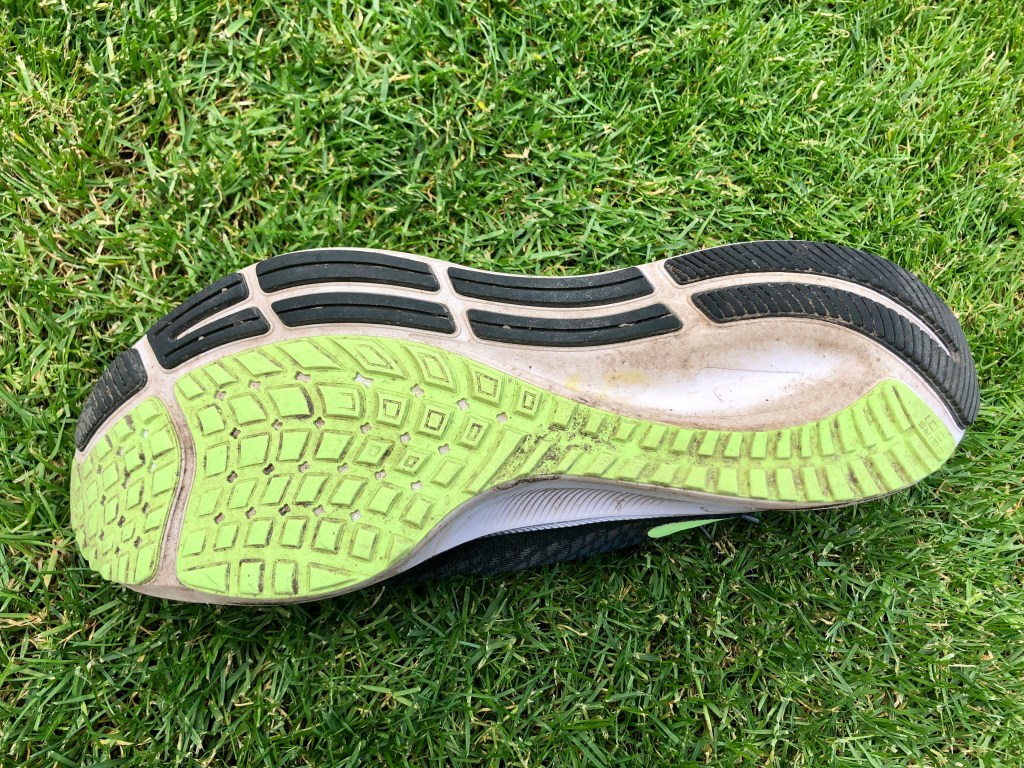
Nike Air Zoom Pegasus 37 – 301 Miles
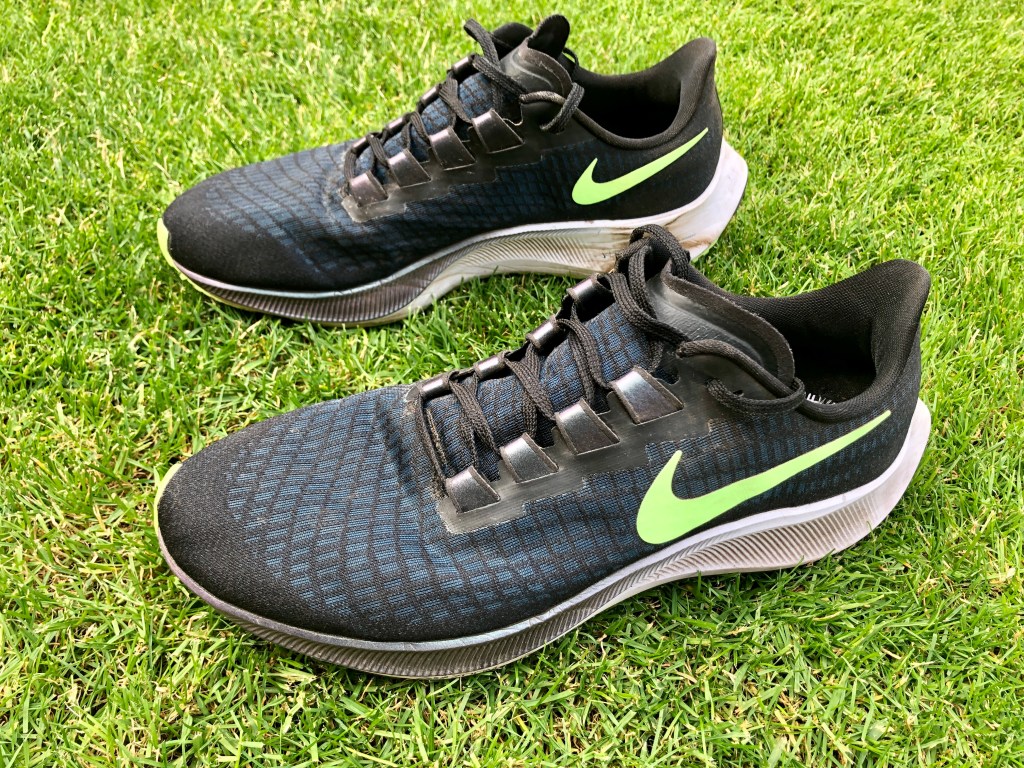

Another shoe from 2020 which is still going strong well into 2021. The Pegasus 37 was my first introduction to the Pegasus lineup. I know! it has taken my 37 iterations before I jumped on board but I love the Pegasus shoes now.
They aren’t the lightweight fast responsive type of shoe but they are the perfect easy day or daily trainer. Given the large amount of rubber on the outsole, they last a long time. I have taken this pair past 300 miles now, which isn’t a huge amount of the last 12 months but I have been running in the Joyride (above) on the dry easy runs. My plan was to wear out the Joyrides but use the Pegasus 37 on the wet muddy days, they are a more practical colourway but the Joyrides have kept on going and now the Pegasus are doing the same.
For 12 months of running, there is not a load of wear on the outsole, the tread is beginning to wear down towards the front inner area. This is where I see the wear first in almost all of my shoes, along with the outer edge of the heal. I think more durable black rubber on the outer edge of the Pegasus 37 is wearing slower than the green rubber which is why I am not seeing the usual heal wear. So good job with that Nike.
The high stack height and extra react foam makes for a soft cushioned landing but doesn’t feel unstable on corners.
Nike Air Zoom Pegasus 38 – 0 Miles
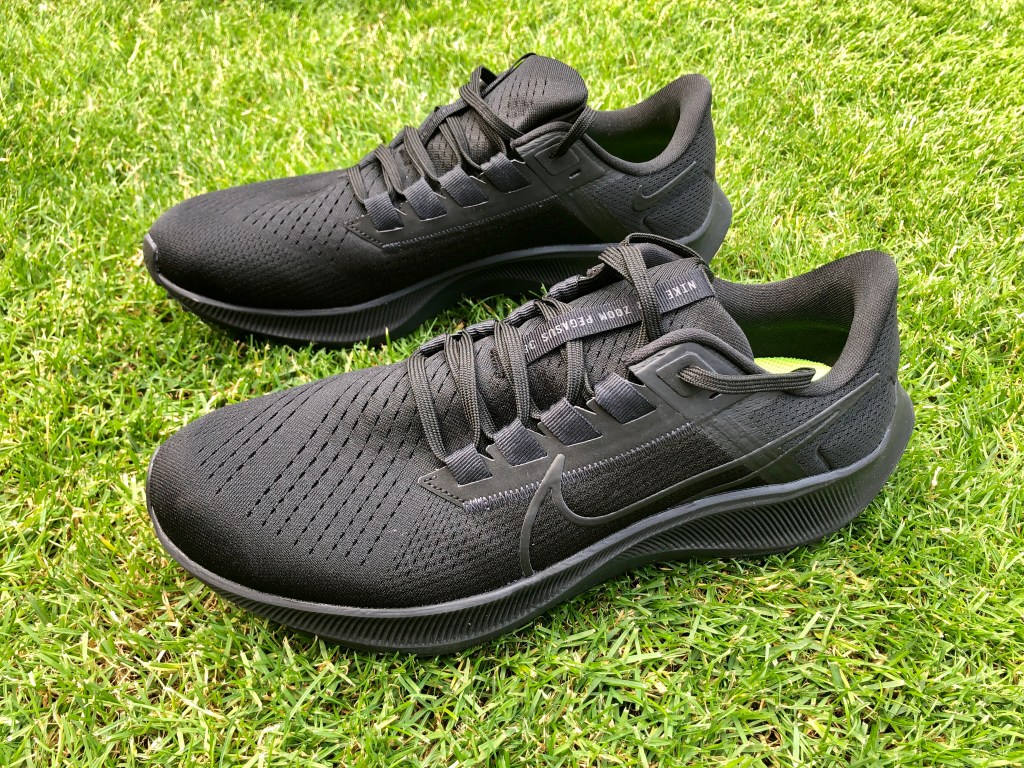
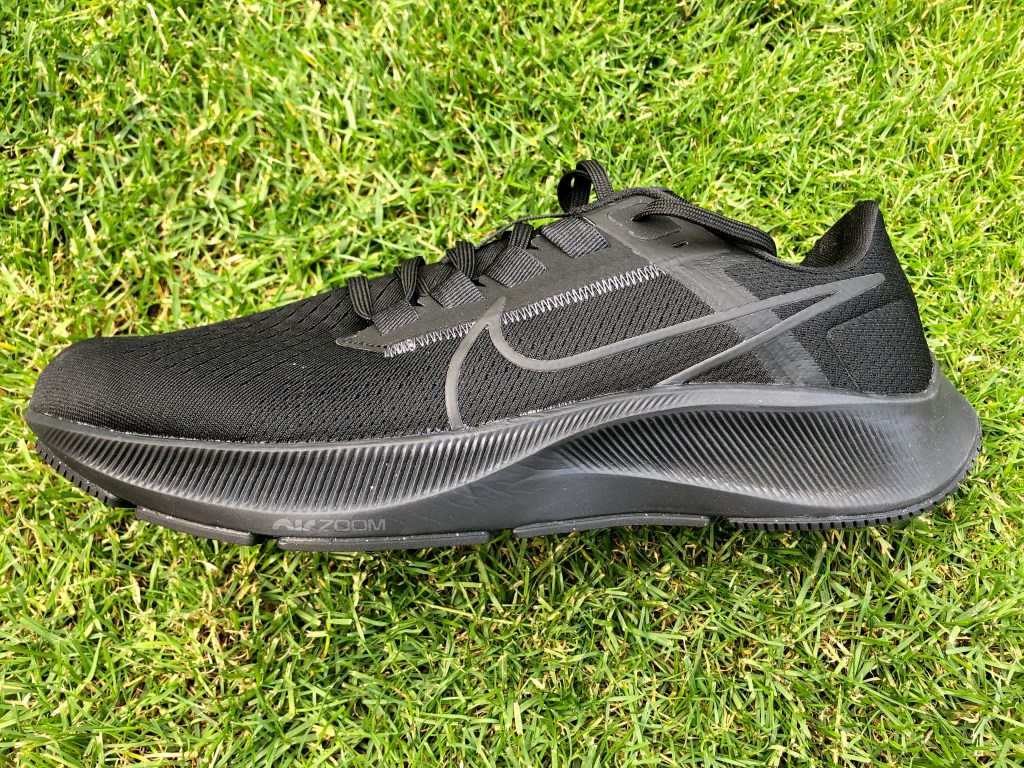
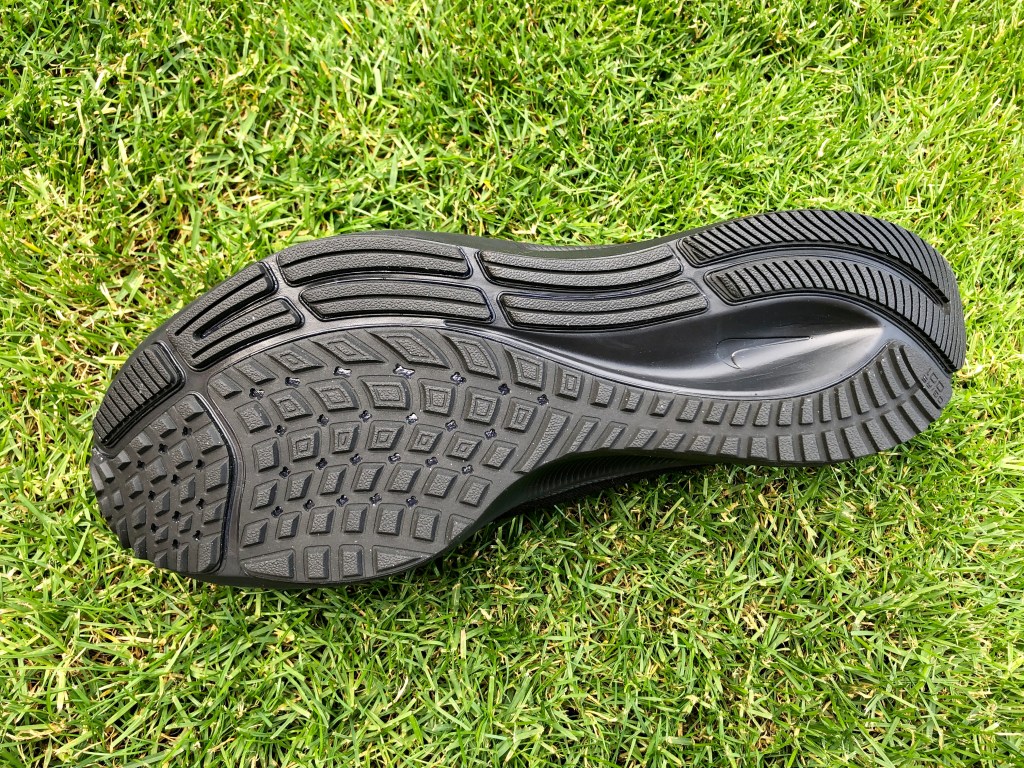
I brought the new Pegasus 38 for the 2021 easy day runs but I am yet to run in these due to the Joyrides and Peg 37 still going strong plus missing 17 weeks of running has dragged out the lifespan of all my 2020 shoes.
I just love the black on black colourway of this Pegasus 38, it will be practical for the wet dirty runs and just looks sick.
There does not appear to be any major changes from the Pegasus 37 (above), the tongue is thinner and less padded on the 38 which falls in line with the tongues on almost all of the other Nike shoes.
Tempo & Interval Shoes:

For my tempo and interval runs, I am looking for a lightweight shoe. Something that is responsive and gives you that kick when pushing off.
I don’t typically like to use the carbon plate shoes such as the Nike VaporFly 4% but I have used them for some of the fast interval sets this year. Sets such as 4min, 6min or 8min intervals at max effort. This is mainly because I want to get these shoes used up and get as much value for money out of them rather than just retire them. I no longer use the 4% for race days so it seems a good fit in this section.
It is worth adding that I am currently using the Nike Pegasus Turbo 2 for my longer tempo runs. These are sessions at or just below half marathon pace for long periods of time such as 4 or 5 mile blocks. Again, they are lightweight and responsive without the babying of the carbon plate. I do prefer to train without that plate so that I can feel the added push from it on race day and just get the legs and body used to the harder running without the “cheat shoes”.
Hoka One One Rincon 1 – 324 Miles (Retired)

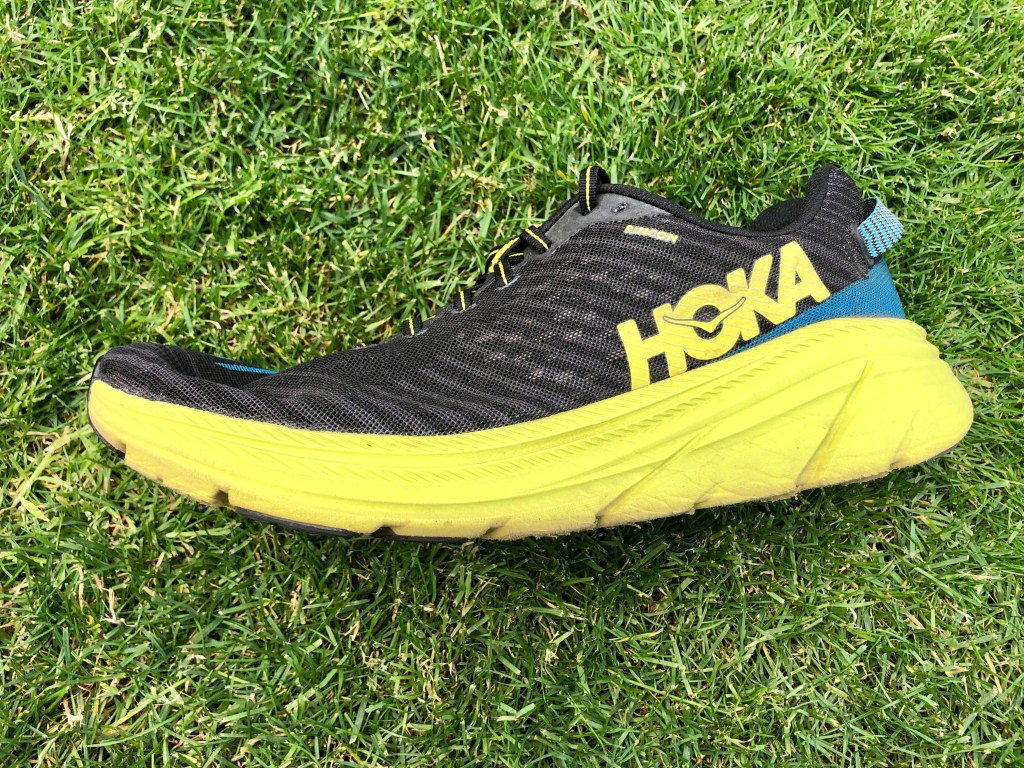

This shoe was gifted to me by Hoka in 2020 to use during my training for the 2020 Manchester Marathon one of the many races that just never came to be in 2020.
Initially I was going to use this for my longer runs. It is lightweight and really well cushioned but I tried it on some of the early tempo runs in 2020 and fell in love with it. It felt so light and had such a spring in its step. I set myself some tough pace targets in 2020 but with this shoe, I felt I could push on and hit those targets.
I did not used it so much this year, mostly due to not doing any tempo or interval runs in the first 5 months of 2021 due to injury but also as the shoe has very little rubber on the outsole the foam is really started to wear away. On the flip side, that lack of rubber is what makes this shoe so light.
I did retired this one at 324 miles but I would definitely consider buying the Rincon 2 or 3 and probably could have got more miles out of it but I now have other options for the tempo and interval sessions that just excite me more than the Rincon….. Endorphin Speed 2!!
Nike ZoomX Vaporfly 4% Flyknit – 180 Miles
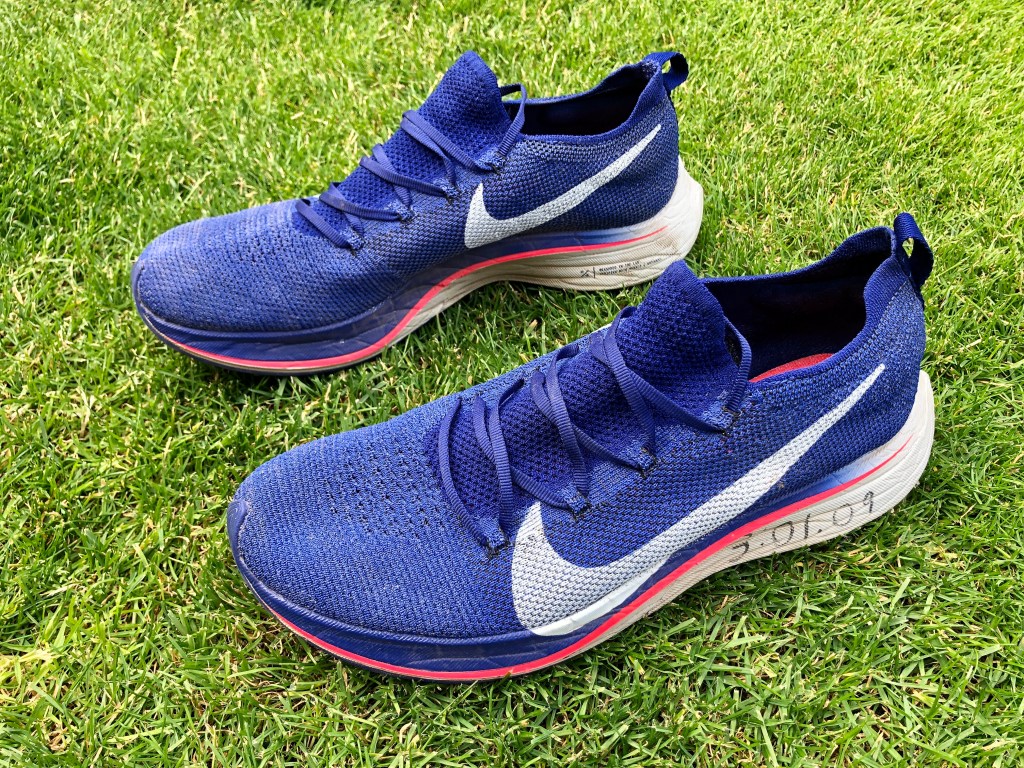
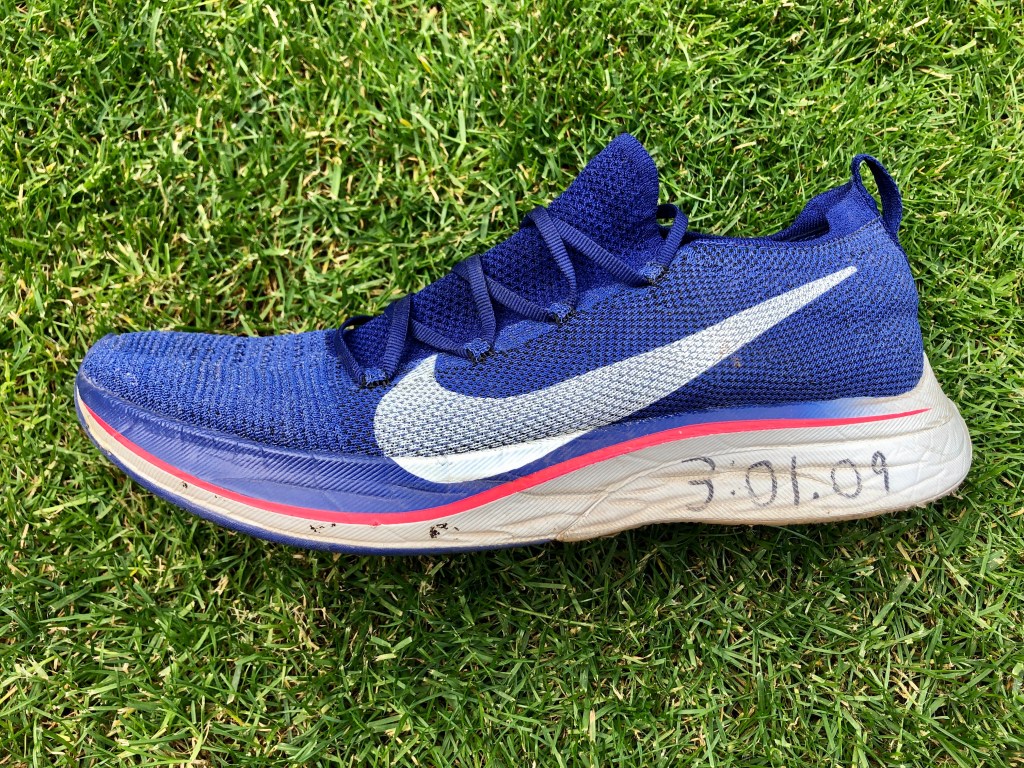

As mentioned above, I have been using the Nike VaporFly 4% for my interval sessions with the City of Stoke AC run club this year.
I brought this shoe back in October 2018 whilst in Chicago and have used it sparingly throughout 2019 & 2020 after hearing the horror stories where people were getting less than 100 miles in them. I have now hit the 180 mile mark and not seeing any massive signs of wear. The ZoomX is a little worn and discoloured but in general, the shoe is holding up well and still giving amazing response and kick back when running at high speed.
For me, the biggest benefit from the VaporFly’s is the cushioning from the high ZoomX stack height. I particularly noticed this during the TOKYO MARATHON 2019 where the legs just did not feel tired or beat up from the 26.2 miles. I guess it is worth mentioning that I did run marathons in the Adidas Ultraboost until then which in comparison now, is like running with two bricks strapped to your feet.
In 2021, I will not be using the 4%’s for any of my marathons (assuming they actually go ahead). I will use the Nike VaporFly Next%’s which I have and just keep using these 4%’s for the intervals, to save the mileage on the race day shoes.
The carbon plate and responsiveness of the ZoomX foam make running fast feel easier. I am not sure whether that is just a confidence thing or the shoe does actually push you down the road when that carbon plate snaps back into position. Either way, my interval sessions are fast (for me).
One drawback I have become more aware of this year is that the higher stack height of these shoes makes it tricky to take corners and tight bends. You do get a feeling that the shoe is washing away underfoot. That is my only drawback…… we won’t mention the price!
Saucony Endorphin Speed 2 – 0 Miles
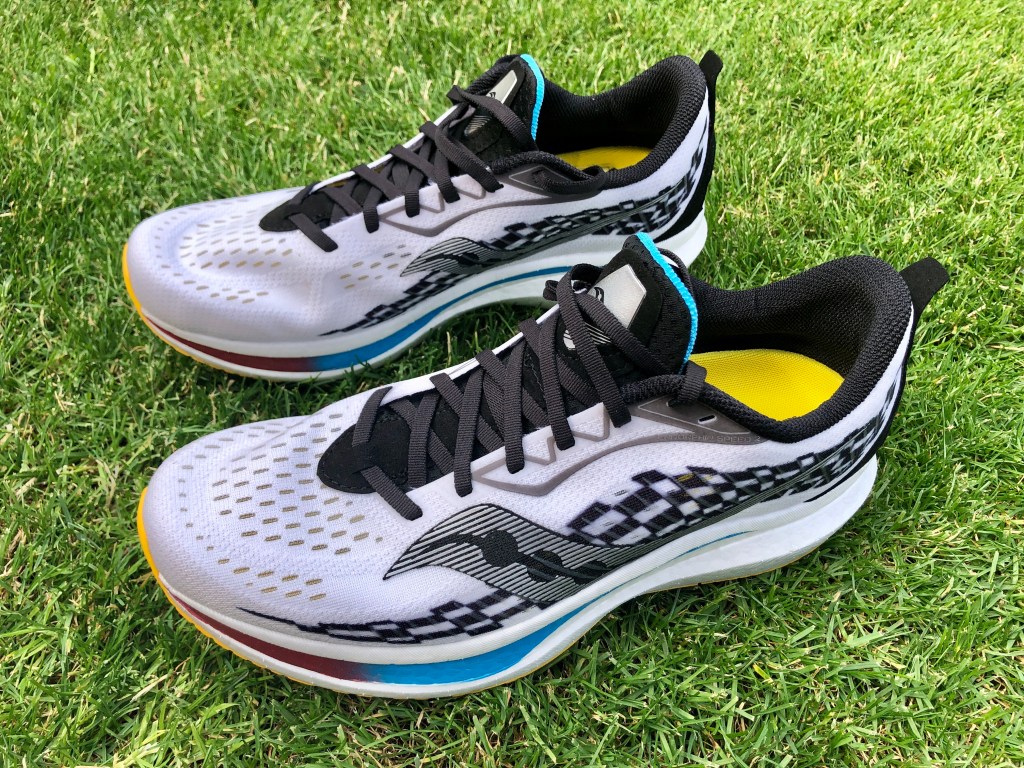
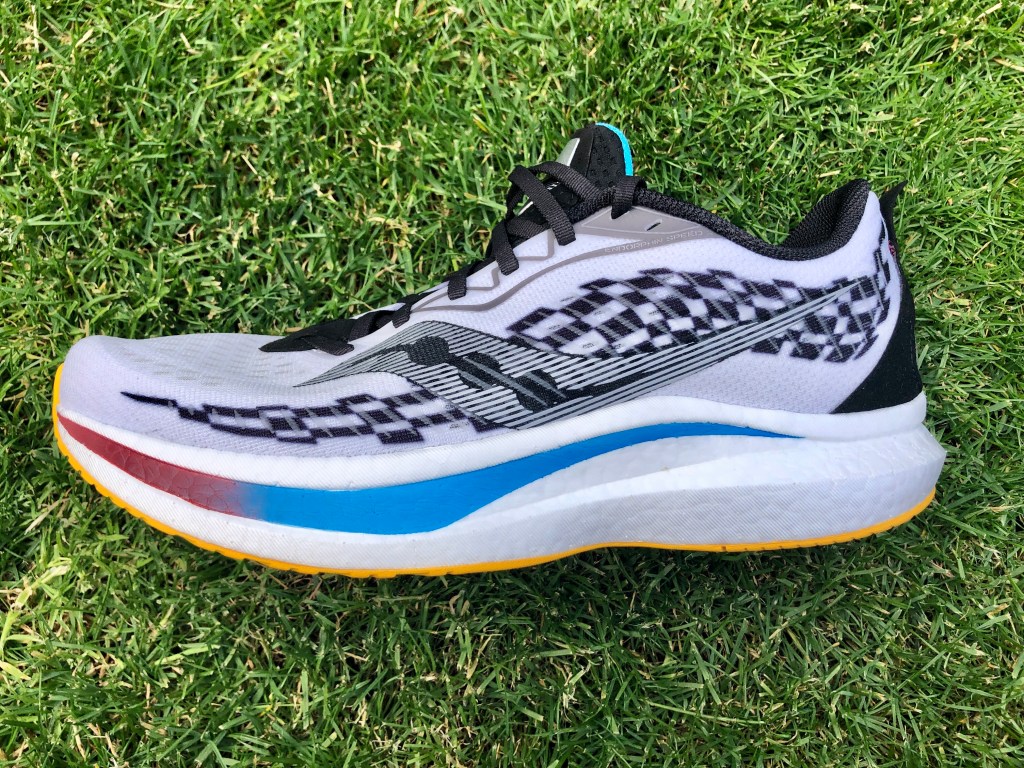
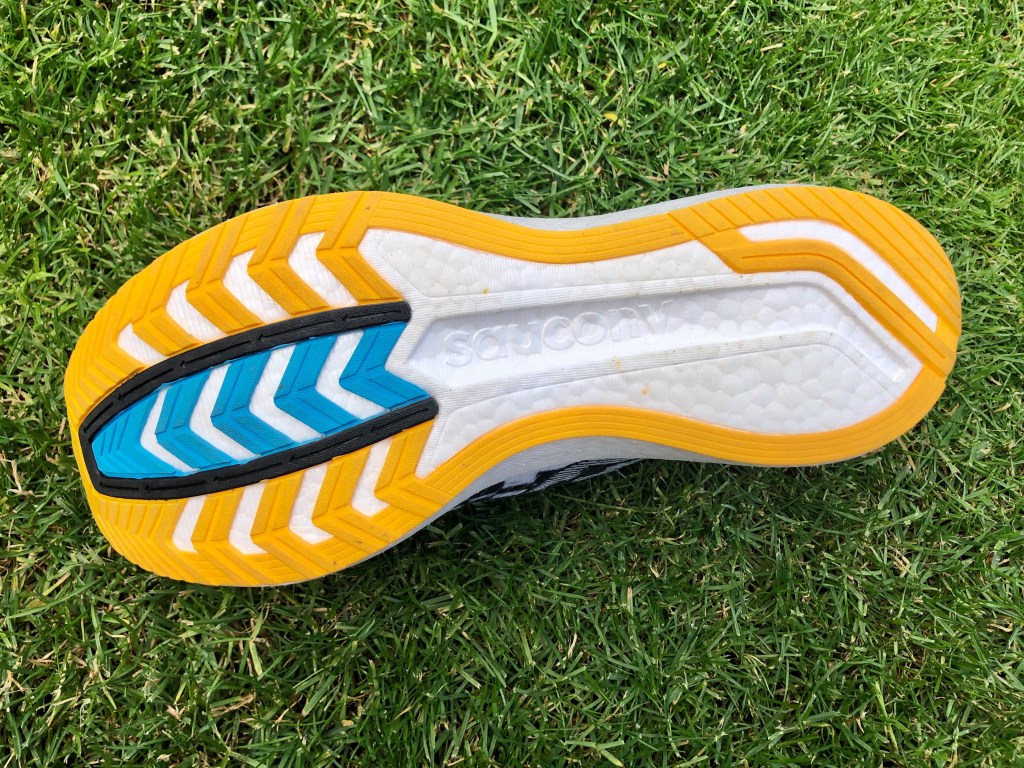
A new addition to the 2021 rotation is the Saucony Endorphin Speed 2. I was saving these for the autumn marathon training but have turned to the old trusty Nike Pegasus Turbo 2 for my longer tempo runs for now.
I will be using the Endorphin Speed 2 very soon and really looking forward to trying these out at speed. They are very lightweight and have a nylon plate inside which should give a good pushback, not quite the same as the carbon plates but that is what makes this shoe perfect for training and I guess race day too if you don’t want to splash out the big bucks for those carbon plate shoes.
Long Run Shoes:
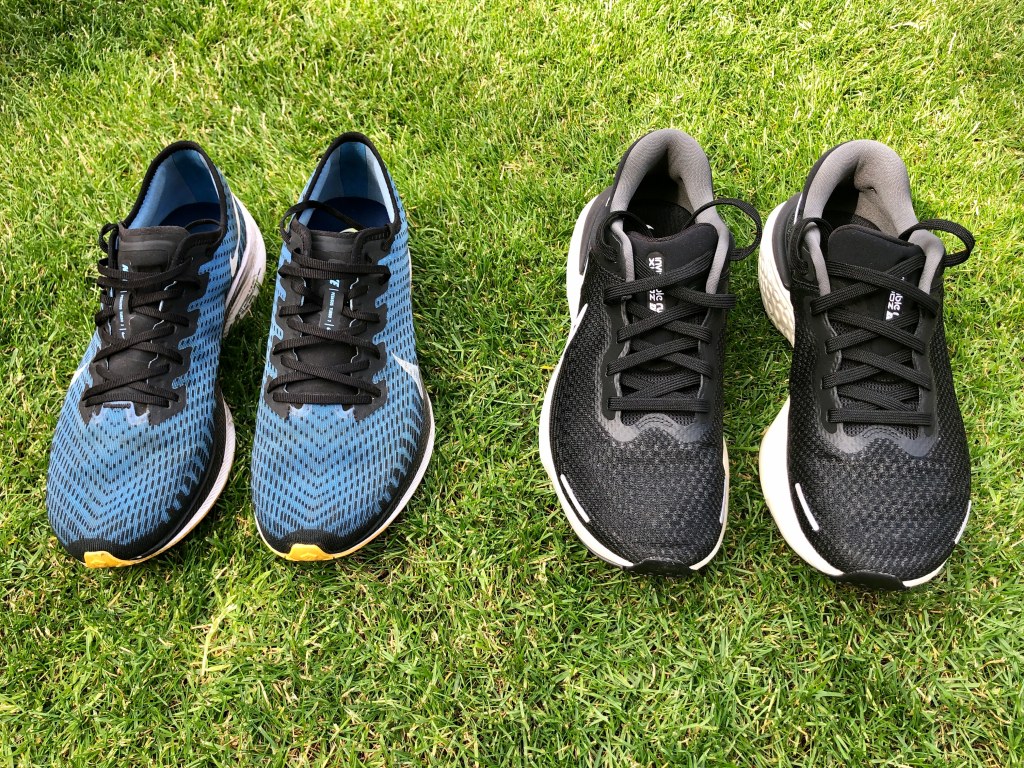
I have always picked a long run shoe that is lightweight and snappy, something that feels responsive but not crazy responsive like a carbon plated shoe for example. Ever since training for the autumn marathons of 2018, I have run my long runs in the Nike Pegasus Turbo / Turbo 2.
This year, I have slightly changed my view of the long run shoe and purchased something that gives more cushioning for a softer landing to protect the legs and feet when out running for 2 or 3 hours.
That being said, when push came to shove and the 2021 autumn marathon training block began, I reached for the Pegasus Turbo 2’s without thinking about it.
Nike Zoom Pegasus Turbo 2 – 415 Miles

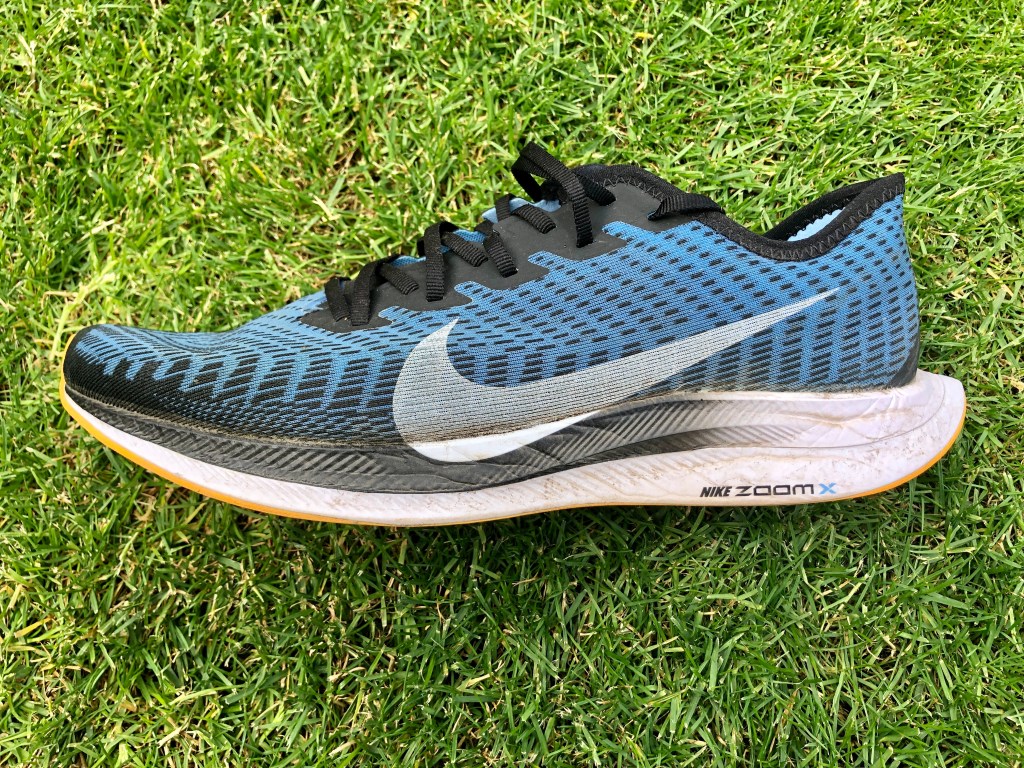

The Nike Pegasus Turbo line has been my favourite shoe since 2018 when the first Peg Turbo was released. When I saw was Nike were not releasing a Turbo 3, instead replacing it with the Tempo Next%, I stocked up with a few pairs of the Turbo 2 before they sold out.
This pair of Turbo 2 was brought last autumn but I did not start running in them until this summer but in the space of 3 months, I have already taken them close to 400 miles with surprisingly little wear showing.
My previous pairs of Peg Turbos have all gone past 600 miles and this pair is looking likely to also pass 600 miles. The upper has never had any issues with wearing or tearing. The midsole remains quite responsive despite the mileage, obviously not as responsive as mile 1 but still good. The only wear that they tend to show is the rubber outsole wearing on the outer heel and in the forefoot, the standard wear for a frequently used shoe.
As mentioned above, this is my go-to shoe for long runs. It is light and responsive. I remember when I first put on the Turbo 1’s in 2018, they felt fast and gave a feeling that your feet were rolling forward and pushing off with each stride. This was pre VaporFly times so that opinion has changed since running in the 4% and Next%.
I quite often turn to this shoe for my tempo runs. Over the past month, I have been using the Pegasus Turbo 2 for my longer tempo and long interval midweek sessions. Sessions like 3 x 4 miles or 2 x 5 miles etc. I feel this shoe still has the speed to push the pace as well as those longer slightly slower weekend runs.
What this shoe doesn’t have is, much to offer in the cushioning department. It is quite a hard ride but for me, this is something I have grown to like for my long runs. I like to save the cushioning and extra kick of the VaporFly Next% for race day but train in a less forgiving shoe. Train the body and mind to push and hold goal marathon pace in a shoe that makes you do more of the work rather than a shoe that helps you along the way. Then, come race day I feel that added extra from the carbon plate and ZoomX cushioning.
My dilemma now is what will I use for my long runs once this final pair of Turbo’s hit their retirement mileage?
Nike ZoomX Invincible Run Flyknit – 36 Miles
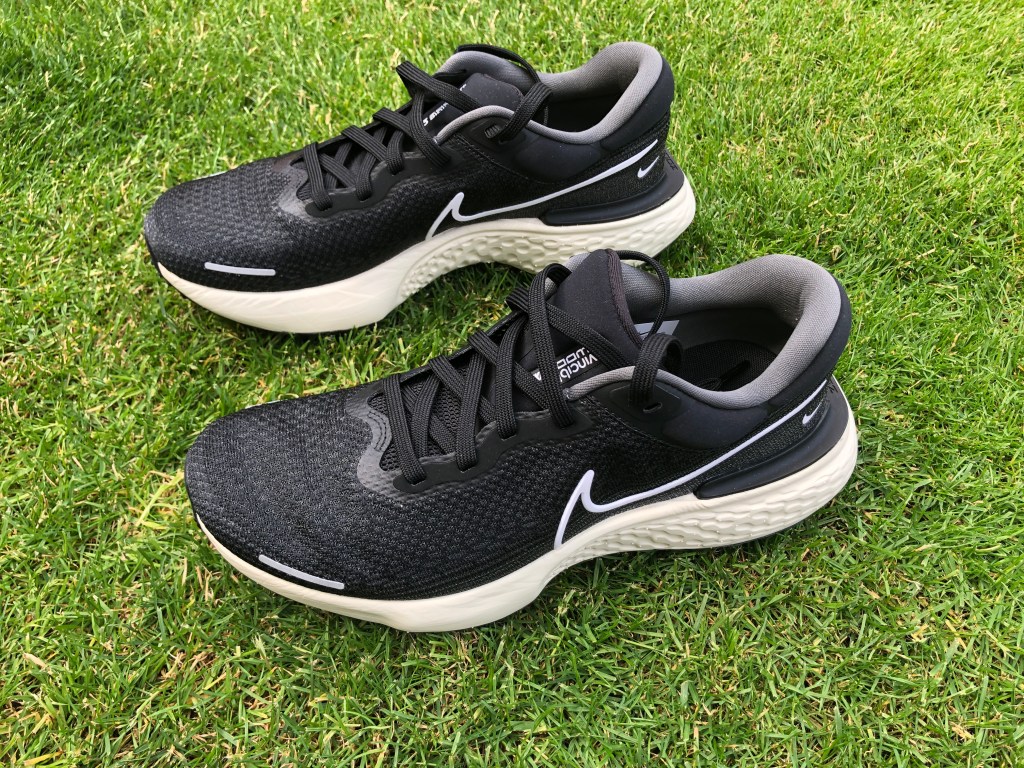
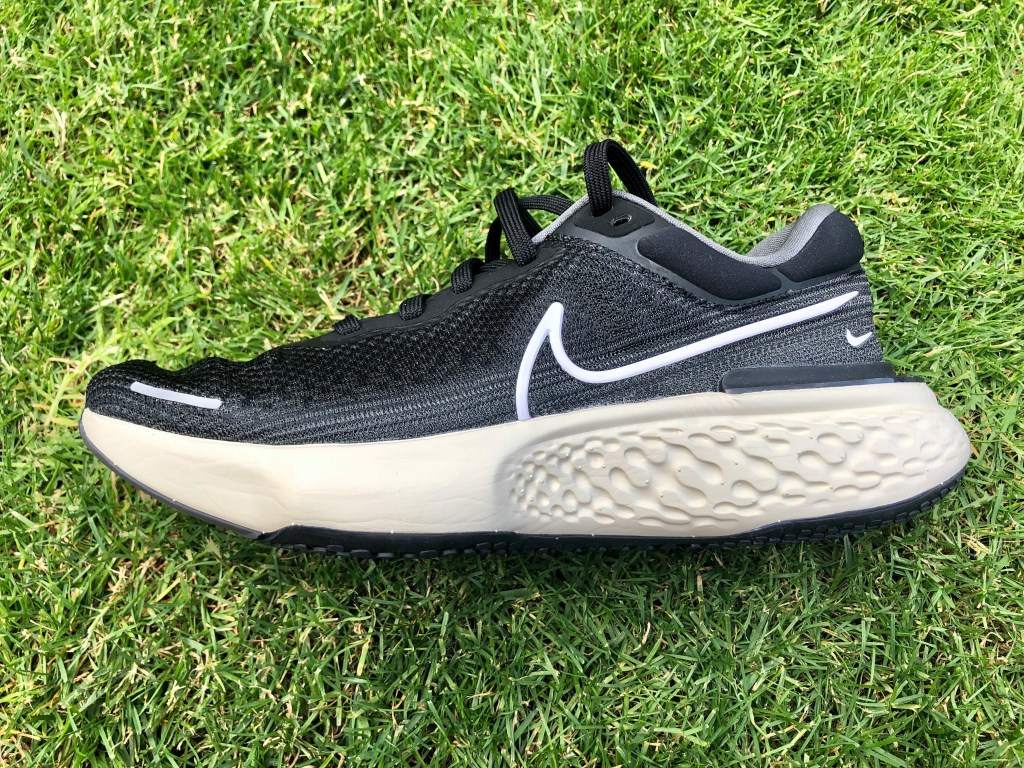
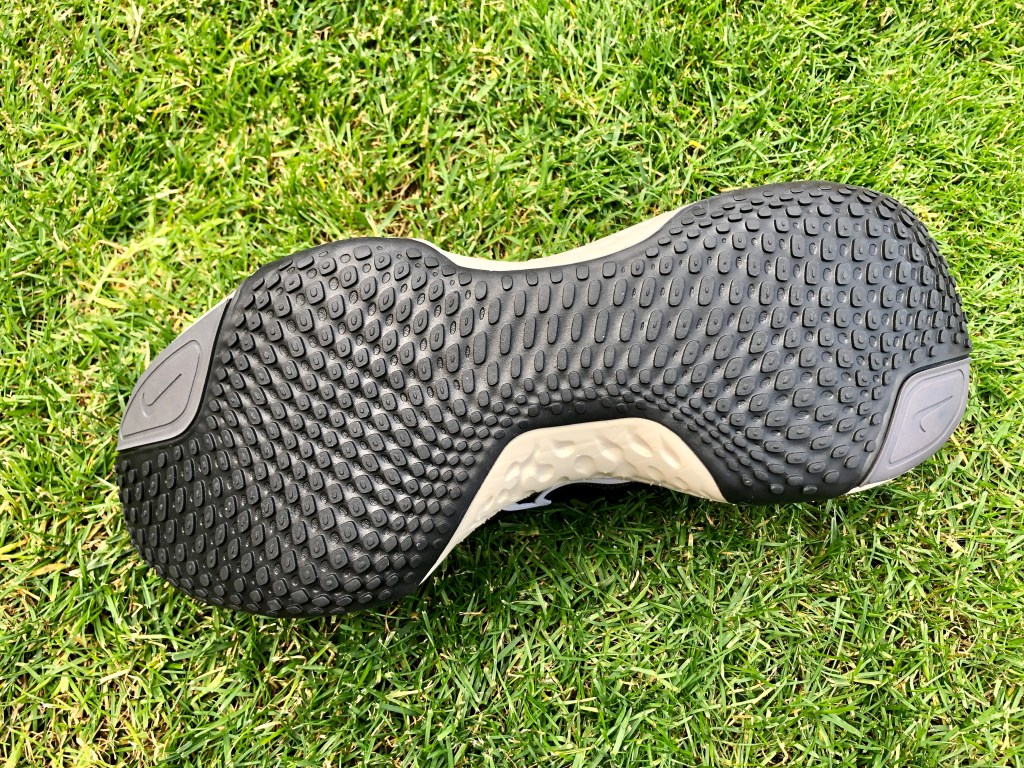
To answer the above question of which long run shoe will I turn to once my beloved Nike Pegasus Turbo 2’s die. I have turned to the Nike Invincible Run. This shoe is my first step away from the Pegasus Turbo lineup since I used the Adidas Ultraboost in 2017 and early 2018 and that felt like I was running with two bricks strapped to my feet.
My thinking for choosing the Invincible Run is cushioning. These shoes have so much cushining look after my feet when out on those long 18 – 22 mile runs. On race days when I have worn the VaporFly 4% and Next% I have really noticed the impact the high stack height of ZoomX has on my legs. They feel fresher for longer, meaning I can push on harder in the latter stages of marathons.
I am thinking of changing my approach to my long runs going forward and bringing more of this cushioning into the long training days. Will it improve my long run pace? I doubt it, but what it should do is protect the legs on those long days meaning I can hit the tempo, threshold and interval sessions harder with fresher legs.
So far, I have only taken these out on two runs as of Sept 2021. I started off with a 20 mile long run where the aim was to run 4 miles @ 7:45/mi then pick the pace up to 7:10/mi for 12 miles before dropping back to 7:45/mi for the final 4 miles. I noticed hot spots on the balls of both feet from less than 4 miles into the run, this got worse and by 6 miles I had to stop and take them off to see what was going on. I always run with Enertor Insoles in my shoes but I took these out and ran the remaining 14 miles without any insoles in the shoe. The hot spots went away and I began to enjoy the shoe. Towards the end of the run I was comfortably running under my pace goals and the legs felt really fresh at the end (for a 20 mile run). Typically, my legs start to ache and feel it around 16 miles in the Pegasus Turbo 2 so the added cushoning in the Invincible’s did its job.
I ran a second 16 mile long run in them, this time with the standard Nike insoles and again, they felt fantastic. I am really looking forward to getting out for more long runs in these. I do wonder what the grip will be like on the wet muddy UK winter roads, I think they could be a bit on the slippery side, I am not too sure this rubber outsole will bite through the mud but time will tell.
Race Day Shoes:

Ah, the race day shoes, how I have missed you over the last 18 months…..
So for a race day, I go for a super lightweight, carbon plate and a good high stack offering a lot of cushion for the half marathon and marathon races. I usually race 5k and 10k in these as well but now I have the Endorphin Speed 2, I may well try them out for the shorter distance races.
Ever since the 2019 Tokyo Marathon where I ran a massively unexpected PB without realising I was running that hard, I have favoured the carbon plate race day shoe. It is no secret that the carbon plate helps to propel you forward with each stride and that thick layer of foam gives the feet and legs a nice soft landing.
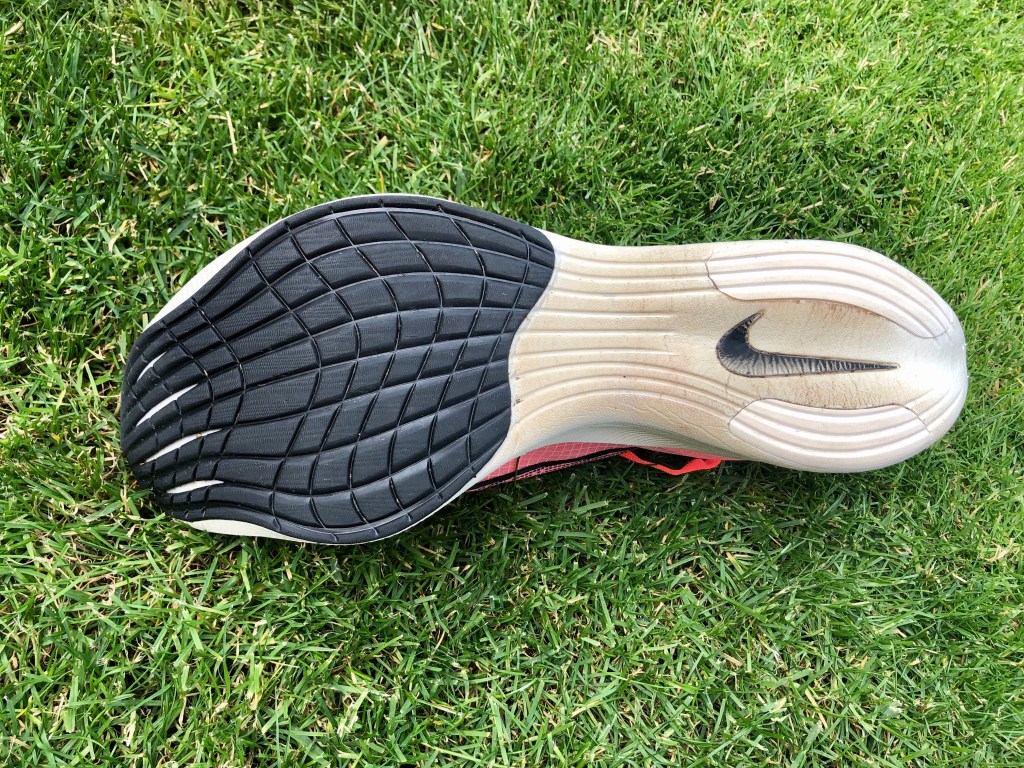
Nike ZoomX Vaporfly Next% (Green) – 197 Miles
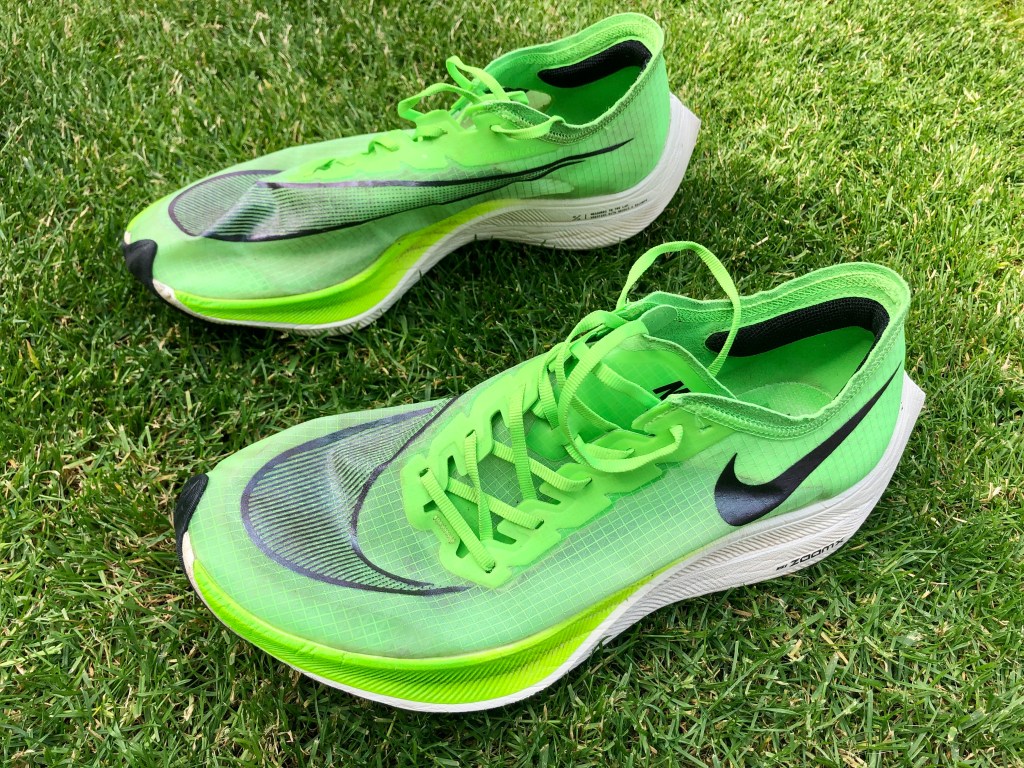


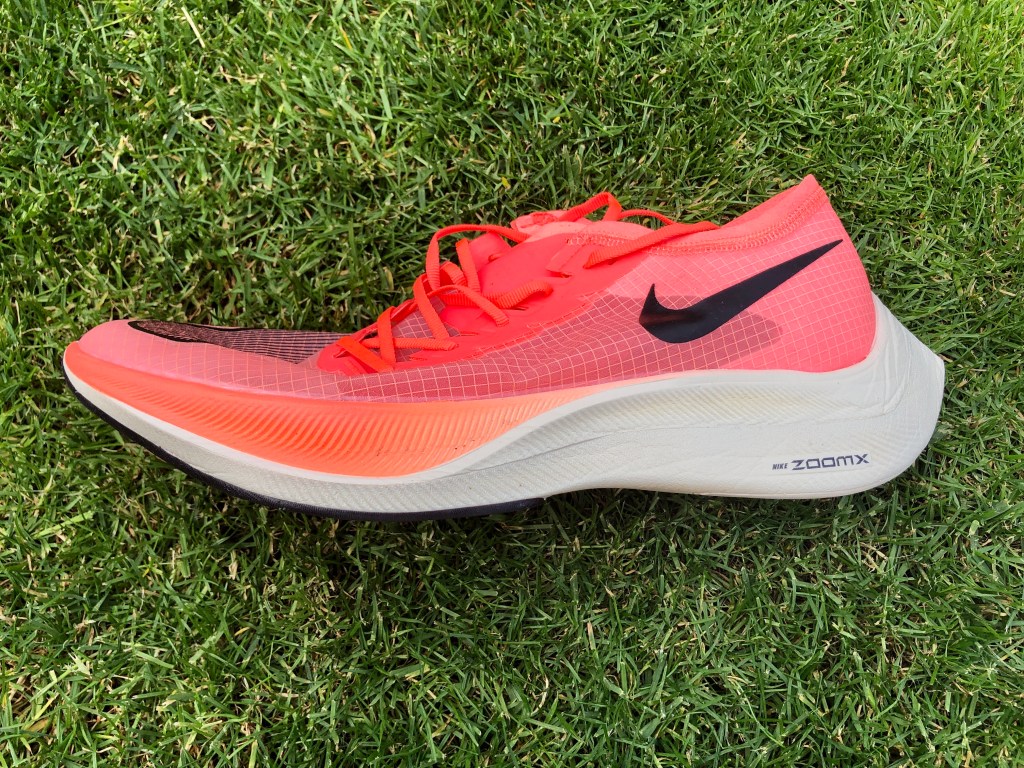
So I will cover both of my race day shoes off with one post here, both are Nike Vaporfly Next% 1’s. The green pair was purchased in 2019 and the Mango in October 2020.
I love this shoe, it is so light and the cushioning from all that ZoomX foam is out of this world. Yes, that high stack height does make taking tight bends a challenge but for the most part, road marathons do not tend to have too many sharp corners.
I did toy with the idea of buying the Alphafly in 2020 but I just didn’t like the look of them and when people started running in them and saying how unimpressed they were, I was happy to buy another pair of Next%. I think the proof is in the pudding when you see almost all of the Nike Elites racing in Next% over the Alphafly.
As much as I love the Next% I am still yet to beat my 5k, half marathon and marathon PB’s which were all set wearing the Vaporfly 4%. I have managed to set a new 10k PB this year and did wear the green Next% when I set new Ironman 70.3 and Ironman PB’s this year.
I am planning on wearing the mango Next% for the Manchester Marathon next month so hopefully have a nice new PB for the Next%’s.
For me, the biggest gain from these shoes is the freshness they give to the legs when you are 20 miles into a marathon. Granted, the legs don’t feel perfect but they do feel a whole lot better than they used to at 20 miles in the Adidas Ultraboost. The lightweight and cushioning really save the legs and absorbs a lot of the impact, leaving more in the legs for that final 10k which we all know, is the most important part of the marathon.
I am really looking forward to lacing up my Next% and seeing what I have in me over the marathon once again. It has been far too long since I raced a marathon.
Nike ZoomX Vaporfly Next% (Mango) – 26.2 Miles

Cross Country / Trail Shoes:
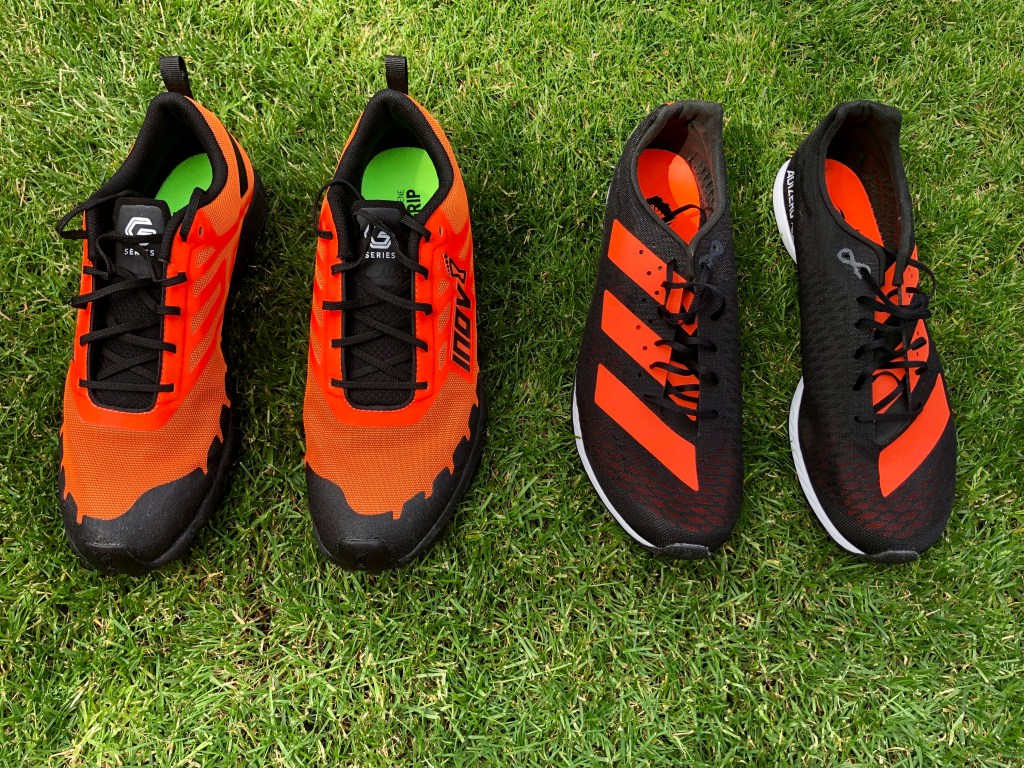
In 2020 I wanted to step away from road running all year round and move onto the trails and try my hand at cross country. I used to race cross country in high school and loved it, what’s not to love about running and mud?
I picked out two shoes that I thought would fit the bill. One pair of cross country spikes for the super muddy races and a trail shoe with a good lug depth to cope with muddy cross country routes which also offer some paved sections.
Then the pandemic struck and all of the 2020 cross country season got cancelled and this years races all fall on or close to dates where I have a road race planned. At least the shoes look clean and show no signs of wear after 12 months in the cupboard.
Inov 8 X-Talon G 235 – 4 Miles
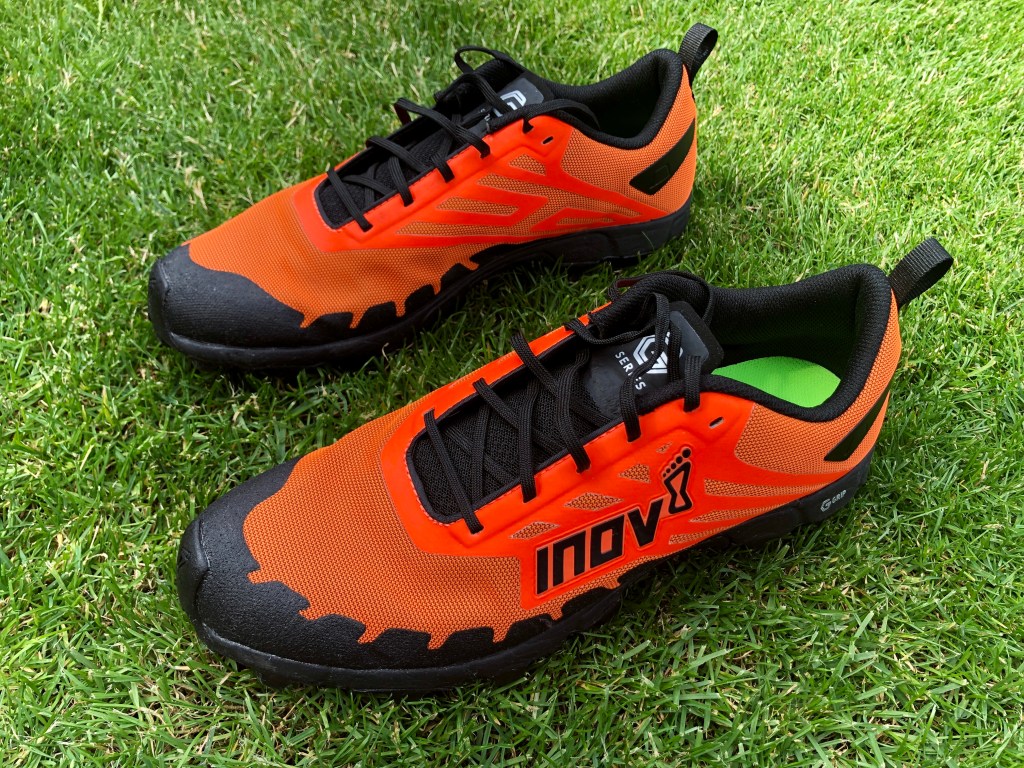
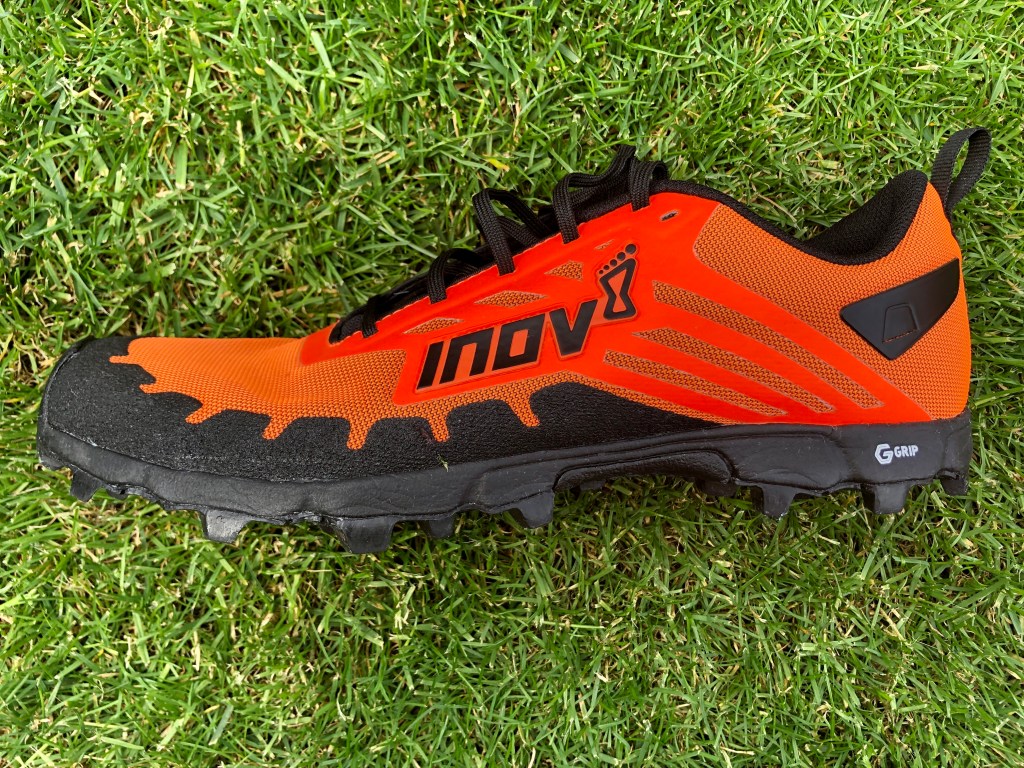
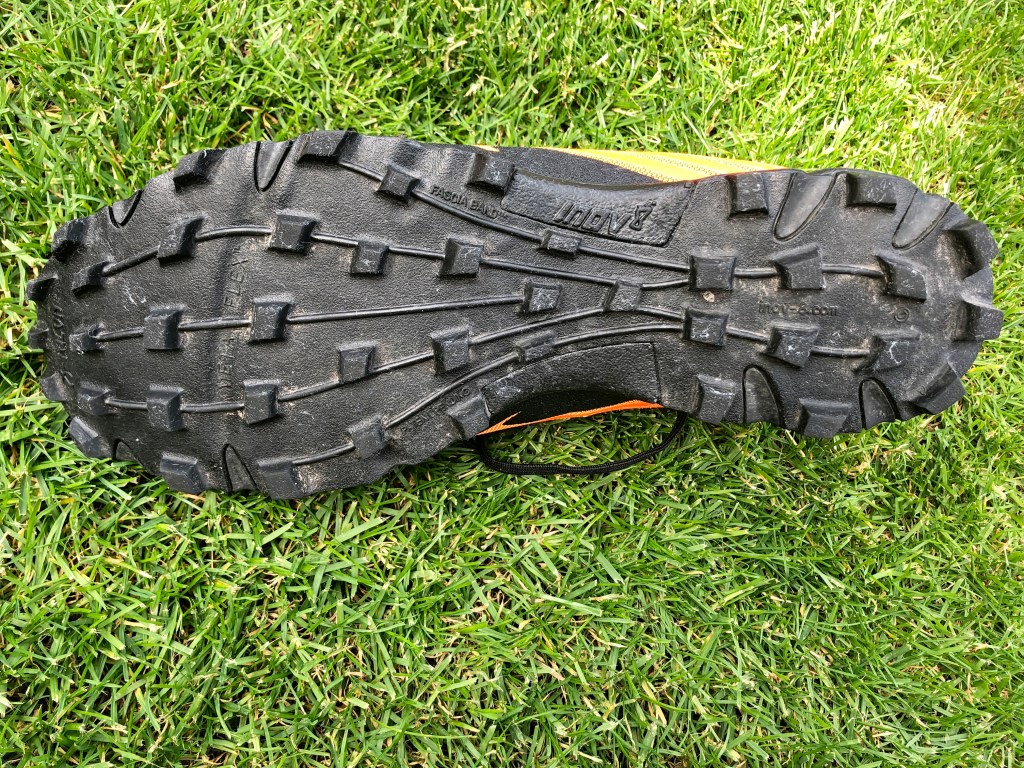
For the muddy/mixed terrain races and trail runs I went for the Inov 8 X-tallon G235. These have an impressive 8mm lug depth which should handle most muddy trails and gravel as well as being good on the cross country routes which go over some paths and tarmac roads.
I have only used them once this year for one of the early 4 mile easy comeback runs following my knee injury. I went along the canal which was a mix of gravel and dirt. Whilst it was a pretty firm dry dirt and fine gravel, the lugs handled it well. I was a little concerned that it would feel like I was skating around on top of the firm dirt but they did dig in slightly and offered plenty of grip.
I will test these out again this winter when things get really wet and muddy along the canal to see just how good that 8mm lug depth really is. I have run along that canal in some really muddy conditions wearing my “normal” road shoes, which I am sure you can imagine, didn’t offer any grip whatsoever. These should dig down through the mud and offer much more stability.
Adidas Adizero XC Spikes – 0 Miles
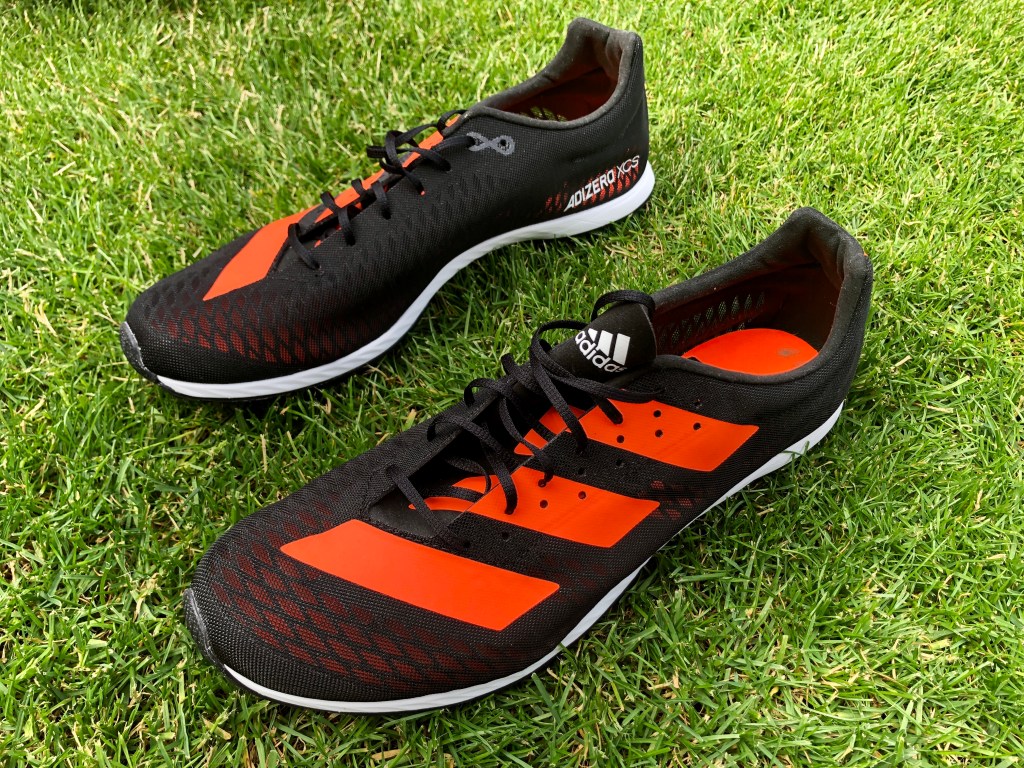


For the grass cross country races which get really wet and muddy, I went with the Adizero XC spikes. They are light and very inexpensive. I didn’t want to spend a lot on a cross country shoe as I won’t get a whole lot of use out of them and boy was I right! 12 months later they are still unused and likely to remain so for another 12 months. At least I have them as an option though.
I brought a bunch of different lengths of spikes so I can swap over depending on what the mud levels are like.
 The Cheshire Runner.